A production trial using two-roll breakdown forming, two-roll profile preforming and four-roll finish rolling achieved a reported finished-product yield of more than 95%. The process was tested with pure titanium, titanium alloy and nickel-clad titanium eyewire profiles.
Titanium eyewire is a small component with demanding production requirements.
It must follow the specified profile accurately, hold the lens securely and provide a consistent surface for subsequent frame-forming, joining and finishing processes. Small variations in symmetry, groove geometry or dimensional tolerance can create problems later in eyewear production.
A documented manufacturing trial evaluated a three-stage cold-rolling method designed to improve the forming accuracy and production yield of titanium eyewire.
THE PROCESS DELIVERED
- >95%Reported finished-product yield
- ±0.02 mmDimensional accuracy in the tested examples
- 0.4 μmLowest reported surface roughness value
The process also produced more symmetrical profile geometry, required fewer deformation passes and showed compatibility with several material and profile options.
These figures describe the reported trial conditions. They should not be treated as guaranteed results for every material grade, profile or production batch.
What Is Titanium Eyewire?
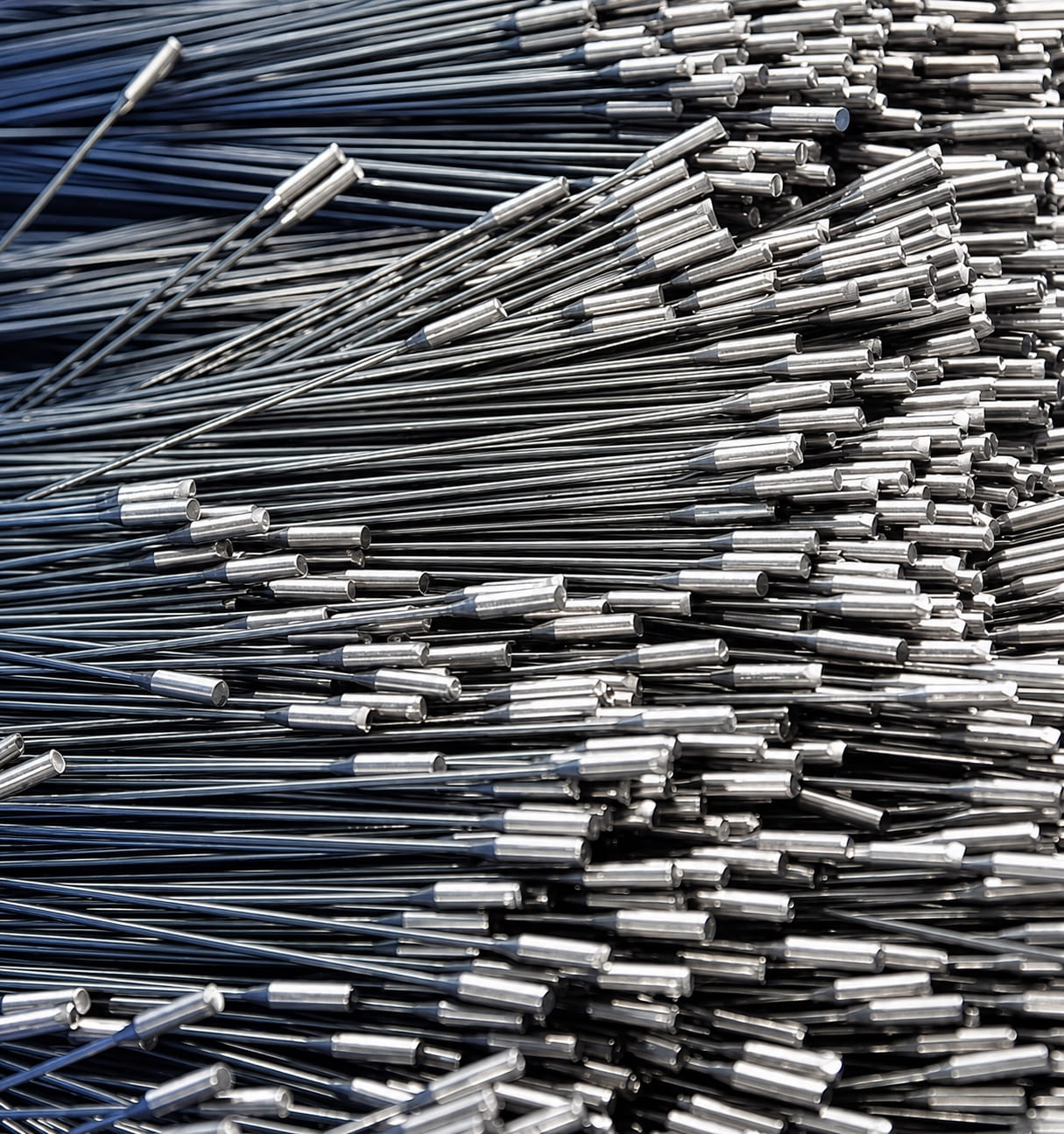
「Eyewire」—also called 「rim wire」—is the profiled metal section used to form the rim around a lens in a full-rim metal eyewear frame.
Unlike ordinary round wire, eyewire requires a carefully controlled cross-section. Its inner groove must accept and retain the lens edge, while the outer profile must meet the intended design and manufacturing requirements.
Depending on the frame specification, the profile may include:
- A straight, angled or rounded outer edge
- Different groove angles
- A curved or shaped base
- Vertical or tapered side walls
- Project-specific width and thickness dimensions
For titanium frames, producing these small and detailed profiles consistently can be difficult because the material’s forming behaviour, springback and surface response must all be controlled.
Why Conventional Processing Can Be Difficult
Two common production routes are drawing and conventional two-roll groove rolling.
Limitations of drawing
During drawing, the material is pulled through a die to reduce and shape its cross-section.
For titanium materials, friction, lubrication and deformation control can make this process challenging. Depending on the material grade, tooling and process settings, possible problems include:
- Difficult deformation
- Surface damage
- Material sticking or galling
- Inconsistent profile formation
- Lower accepted-product yield
Limitations of ordinary two-roll forming
A standard two-roll system applies force mainly from two opposing directions.
It can be suitable for simpler profiles, but more complex eyewire sections may be difficult to control. Side-wall angle, left-to-right symmetry and groove dimensions may vary if the complete profile depends on only two forming directions.
The trial therefore separated the deformation into three controlled stages.
The Three-Stage Titanium Eyewire Rolling Process
Stage 1: Two-roll breakdown forming
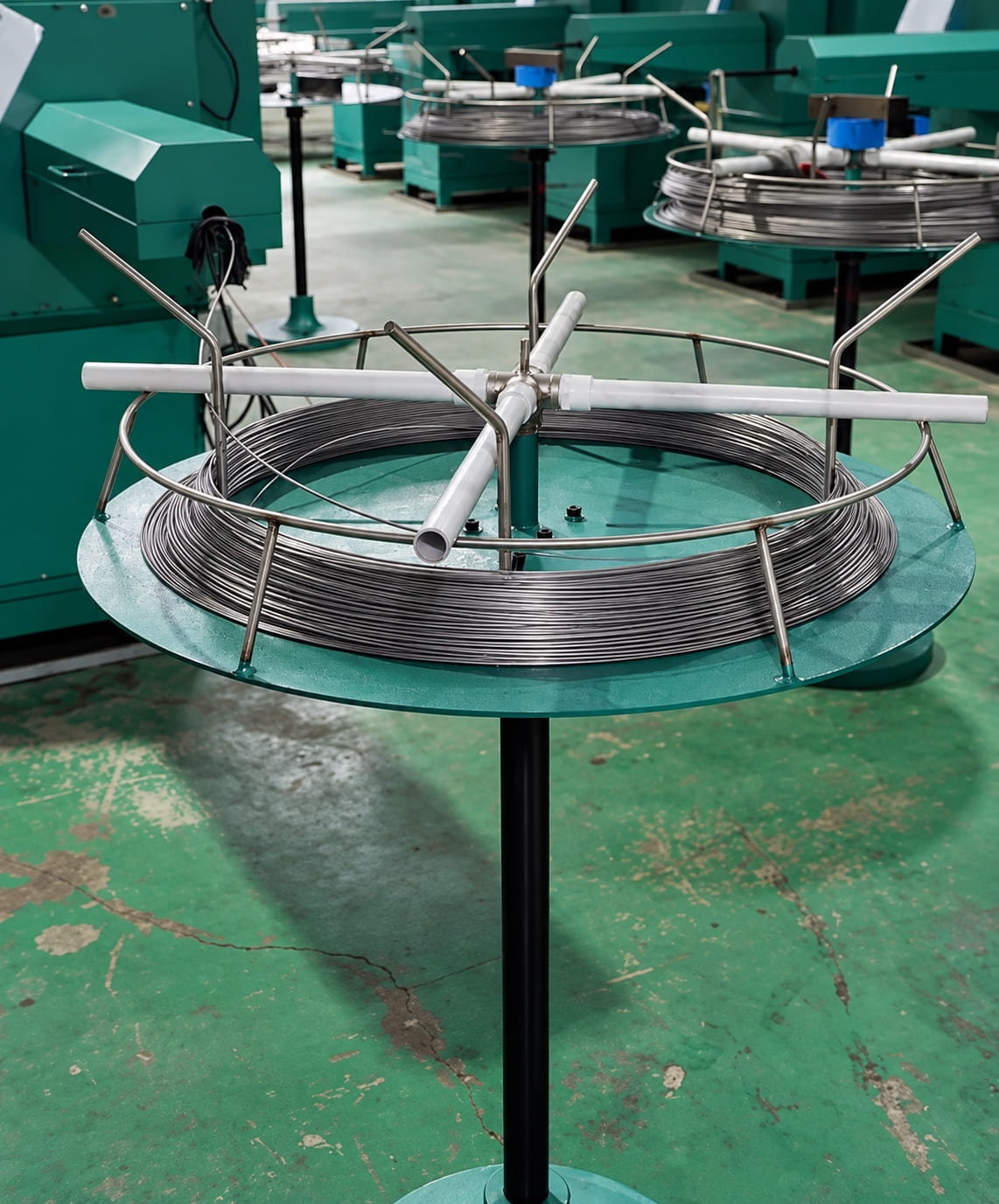
The process begins with prepared round, square or rectangular stock made from pure titanium, titanium alloy or nickel-clad titanium.
A two-roll groove is selected according to the required finished geometry. The stock is cold-worked to produce an initial breakdown section.
Reported operating conditions:
- Rolling speed: 6 metres per minute
- Oil lubrication
- Tension applied before and after the rolls
This stage does not attempt to create the final profile immediately. Its purpose is to move the starting material toward a more suitable intermediate geometry.
Stage 2: Two-roll profile preforming
The breakdown section then passes through a combined two-roll groove.
At this stage, the characteristic lens-retaining groove and the main external geometry begin to take shape. The resulting preform is close to—but not yet identical to—the finished eyewire dimensions.
Reported operating conditions:
- Rolling speed: 4–6 metres per minute
- Oil lubrication
- Controlled front and rear tension
Dividing the deformation between the first and second stages can reduce the amount of shape change required during final finishing.
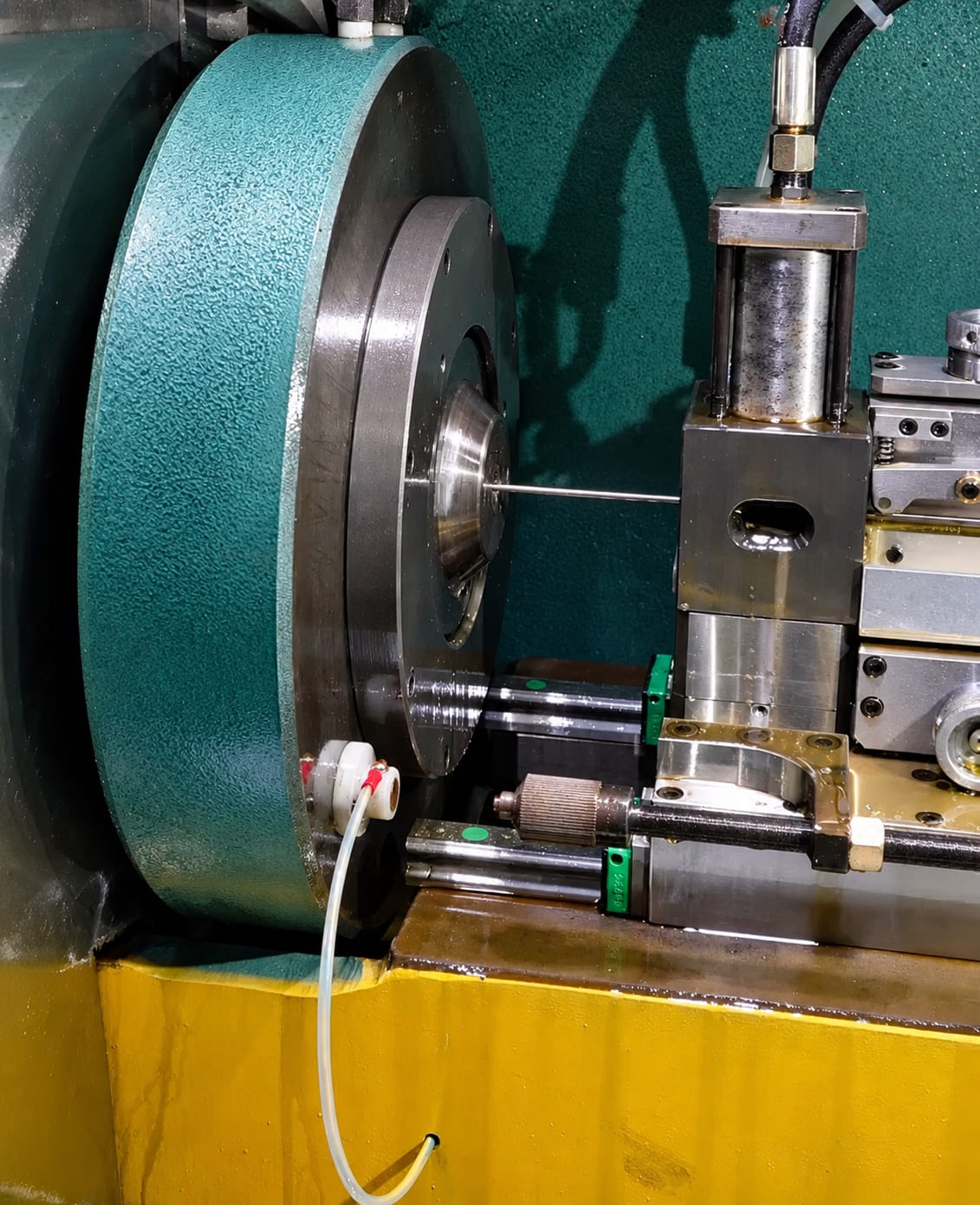
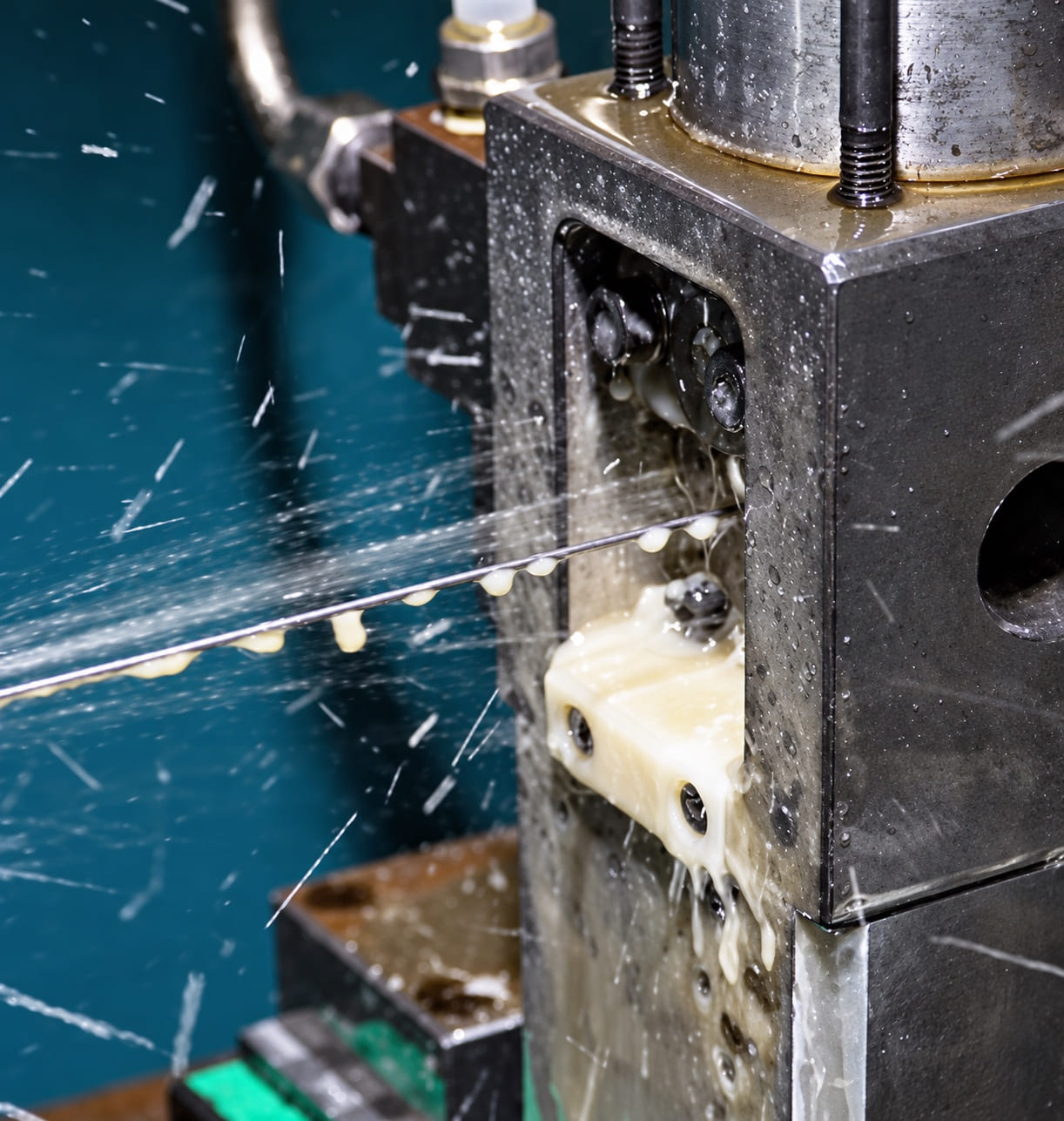
Stage 3: Four-roll finish forming
The preform is finished using a four-roll combination consisting of:
- An upper roll
- A lower roll
- A left-side roll
- A right-side roll
Together, the four rolls create a closed profile corresponding to the required finished shape and dimensions.
Reported finishing speed: 4–6 metres per minute.
Because the workpiece is controlled from four directions, the finishing stage can distribute the forming load more evenly and provide more direct control over the top, bottom and side surfaces.
Why the Four-Roll Finishing Stage Matters
The principal advantage is not simply the number of rolls. It is the ability to control several surfaces of the profile at the same time.
This can help with three common production challenges.
1. Profile symmetry
Left and right rolls can control the side geometry while the upper and lower rolls control the profile height and base.
This arrangement can make it easier to produce a more balanced cross-section than a process relying only on vertical compression.
2. Dimensional control
The finishing groove is assembled to correspond with the required final profile.
When the rolls are correctly positioned and the incoming preform is stable, the finishing stage can correct smaller dimensional variations before the material leaves the rolling system.
3. Profile flexibility
Changing the relevant vertical-roll geometry allows different eyewire sections to be produced.
The reported process covered:
- Square-edge profiles
- Angled-edge profiles
- Rounded-edge profiles
- Groove angles such as 120°, 110° and 100°
Every new profile still requires suitable tooling, process validation and inspection. Four-roll forming does not eliminate the need for product-specific development.
Reported Production Results
Three material examples were included in the trial.
| Test | Starting material | Finished profile | Reported result |
|---|---|---|---|
| 1 | Ø1.3 mm pure titanium wire | 1.8 × 0.9 mm, curved base, 5° side walls | ±0.02 mm dimensional accuracy; 0.4 μm reported surface roughness; yield above 95% |
| 2 | Ø1.4 mm titanium alloy wire | 2.0 × 1.0 mm, curved base, 5° side walls | ±0.02 mm dimensional accuracy; 0.63 μm reported surface roughness |
| 3 | Ø1.3 mm nickel-clad titanium wire | 1.8 × 0.9 mm profile | Uniform nickel layer reported; yield of 95% |
The surface figures should be published together with the actual measurement method and roughness parameter—such as Ra—if these records are available.
Likewise, “yield” should be clearly defined. For production comparison, buyers need to know whether the figure represents:
- Material utilisation
- First-pass acceptance
- Accepted finished length
- Quantity passing dimensional inspection
- Overall batch yield after all defects are removed
A percentage is most useful when its calculation method and inspection criteria are stated.
What Buyers Should Verify
The trial results are promising, but production capability should be evaluated through samples and measurable inspection records.
Material specification
Confirm whether the material is commercially pure titanium, a specified titanium alloy or nickel-clad titanium. These are different material systems and should not be grouped under a single generic “titanium” description.
Profile drawing
The technical drawing should define:
- Overall width and height
- Groove dimensions
- Groove angle
- Base radius
- Side-wall angle
- Corner radii
- Dimensional tolerances
Surface requirement
Specify the required surface condition and its measurement method. A numerical roughness value without a defined parameter or test method can lead to misunderstandings.
Cross-section inspection
Measure samples from different positions along the processed wire. This helps determine whether the profile remains consistent throughout the production length.
Downstream forming test
An eyewire profile that meets its cross-sectional drawing should also be tested in the next production stages. These may include bending, rim forming, cutting, joining and lens fitting.
Batch traceability
Material grade, incoming wire size, tooling set, rolling speed and inspection results should be recorded for repeat orders.
What the Results Mean for Eyewear Development
For an eyewear brand or importer, improved eyewire consistency can support:
- More repeatable rim forming
- Better lens-groove alignment
- More consistent frame symmetry
- Reduced rework during assembly
- Greater flexibility when developing different rim profiles
However, a high component yield does not automatically guarantee a high finished-frame yield.
The complete result also depends on material consistency, tooling condition, welding or brazing, heat input, surface finishing, plating, assembly and final inspection.
The rolling process should therefore be treated as one controlled part of the complete titanium-frame production system.
Frequently Asked Questions
Why is titanium eyewire more difficult to form than ordinary wire?
Eyewire has a complex cross-section rather than a simple round or flat shape. Titanium’s friction, springback and deformation behaviour can make it difficult to reproduce this geometry consistently without suitable tooling, lubrication and tension control.
Why not create the final profile in one rolling pass?
Attempting too much deformation in one pass can increase forming instability, surface damage and dimensional variation. Breaking the operation into breakdown, preforming and finishing stages allows the geometry to develop progressively.
Does four-roll forming always produce a yield above 95%?
No. The reported figure applies to the stated trial conditions. Actual yield depends on material grade, incoming dimensions, profile complexity, tooling accuracy, machine setup and acceptance criteria.
Can the same process handle different titanium materials?
The reported process was applied to pure titanium, titanium alloy and nickel-clad titanium. Each material may still require its own tooling corrections and validated operating parameters.
Nickel-clad titanium should not be confused with nickel-titanium shape-memory alloy. They have different structures, properties and applications.
What should be inspected before approving bulk production?
Buyers should verify the raw-material certificate, cross-sectional dimensions, groove geometry, surface condition, profile symmetry, accepted yield definition and performance during downstream frame production.
From Profile Accuracy to a Better Titanium Frame
The trial shows how a staged forming strategy can address some of the difficulties involved in manufacturing precision titanium eyewire.
Two-roll breakdown forming prepares the material. Two-roll preforming creates most of the required geometry. Four-roll finishing then controls the profile from four directions to improve symmetry and dimensional accuracy.
Under the reported test conditions, the process achieved more than 95% yield and dimensional accuracy within ±0.02 mm in the specified examples.
For B2B eyewear projects, the most important lesson is broader: material, tooling, process parameters and inspection criteria must be developed as one connected system.
Developing a titanium eyewear collection?
Share your target frame style, material, dimensions and order quantity with the yoanglasses team. We can help coordinate product development, sampling and production requirements.